
Target-level detection
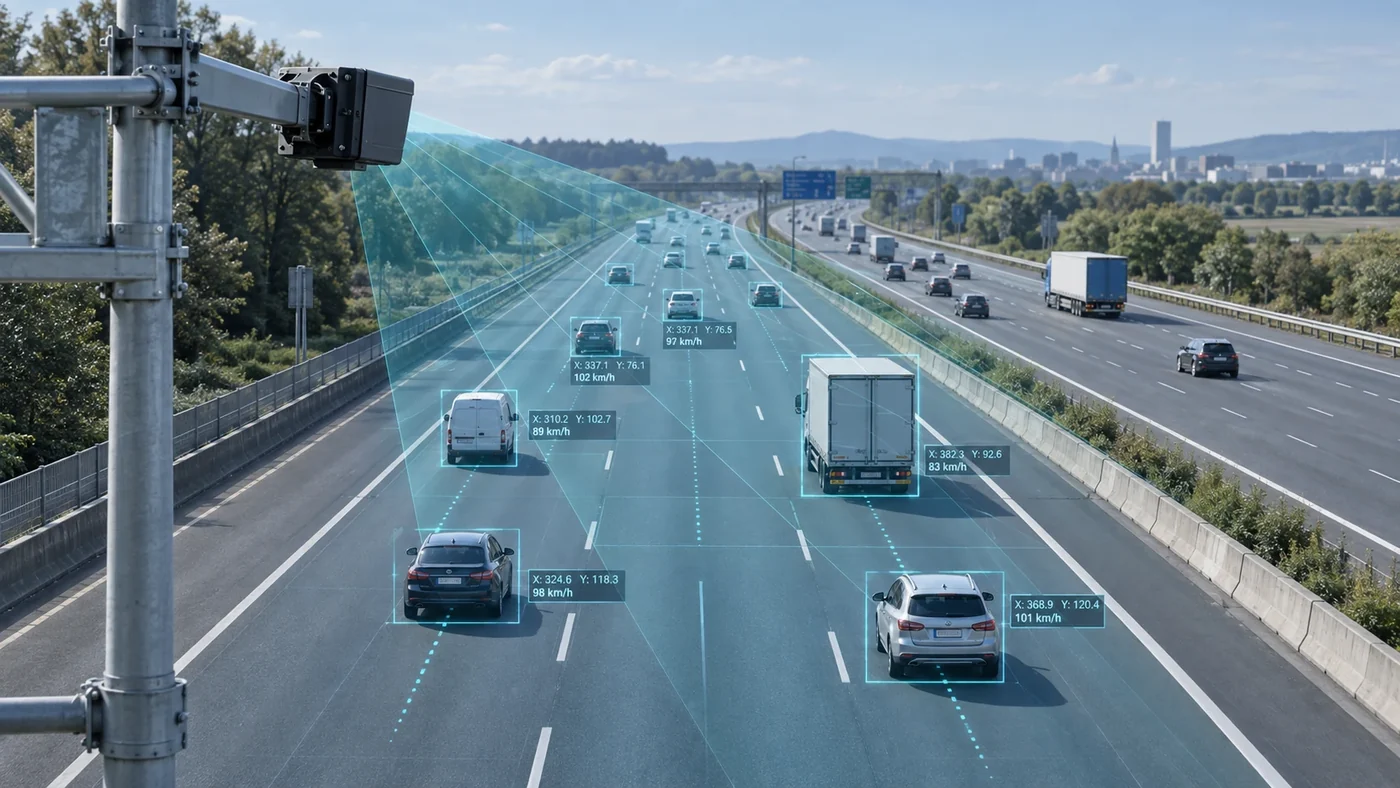
Identify cars, trucks, motorcycles and pedestrians while maintaining a separate track for each detected object.
77 GHZ LONG-RANGE TRAFFIC FLOW RADAR
Monitor vehicles across up to eight lanes and up to 300 metres. HC-M250 combines target-level coordinates, speed and trajectories with lane-level traffic statistics for networked intelligent transportation systems.
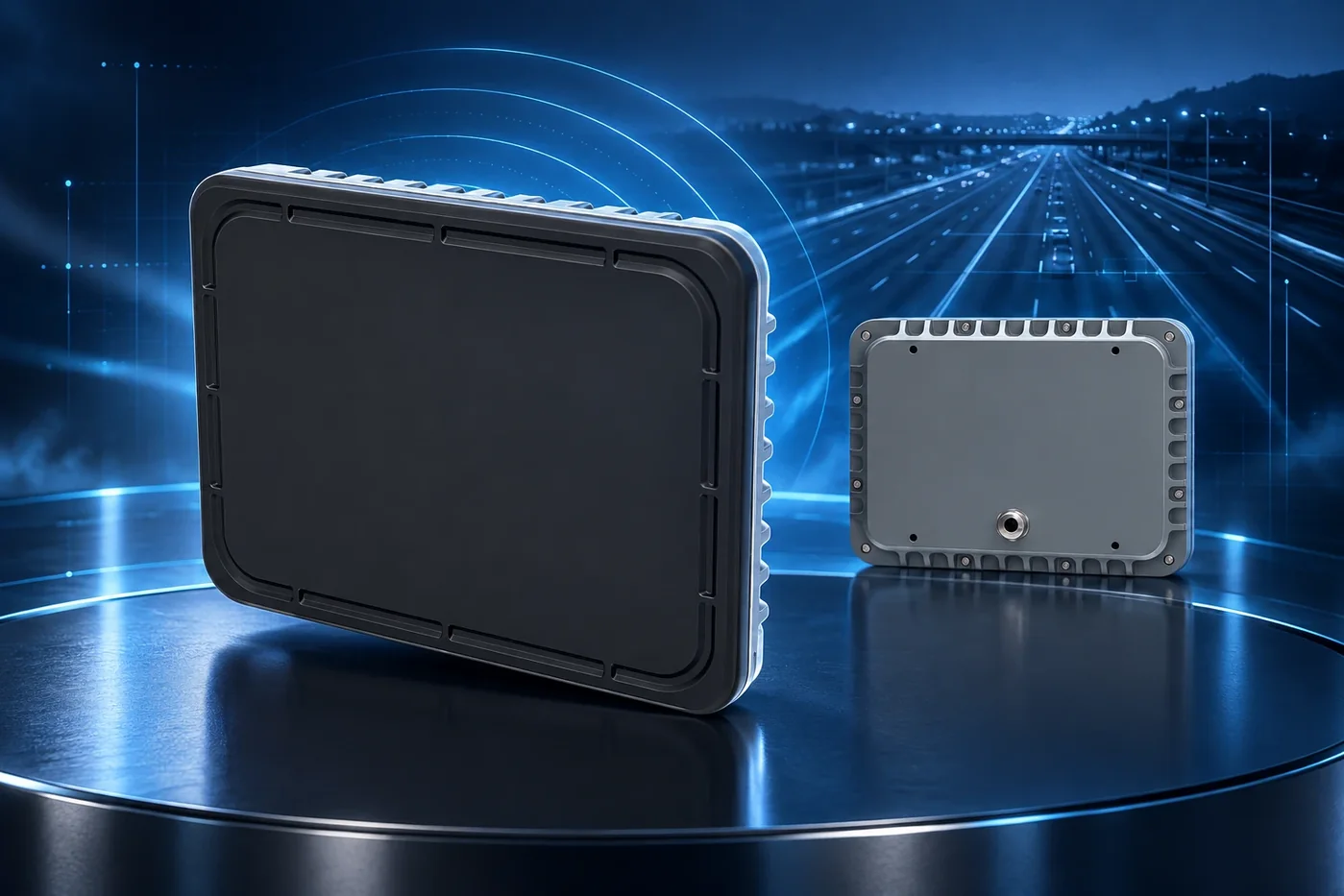 HC-M250
PRODUCT OVERVIEW
HC-M250 extends multi-target traffic sensing to 300 metres and delivers data over Ethernet, giving integrators one radar source for monitoring, vehicle-road coordination and signal control.
Identify cars, trucks, motorcycles and pedestrians while maintaining a separate track for each detected object.
Output target ID, X/Y coordinates and real-time speed for downstream decision and visualization systems.
Calculate volume, average speed, lane occupancy, headway and distance between vehicles.
Monitor approaching and departing traffic at up to 300 metres without relying on ambient light.
ETHERNET DATA & INTEGRATION
HC-M250 provides target tracks and traffic-flow information through Ethernet communication for traffic monitoring platforms, vehicle-road coordination and traffic signal control. For the detailed communication protocol and integration documentation, please contact our technical team.
APPLICATIONS
Application note: HC-M250 is positioned for traffic monitoring and control integration, not traffic enforcement.
Explore the traffic flow monitoring solution →PRODUCT DETAILS
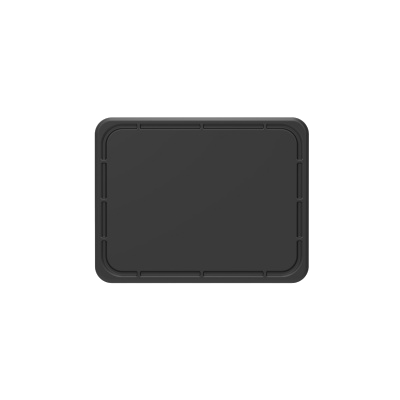
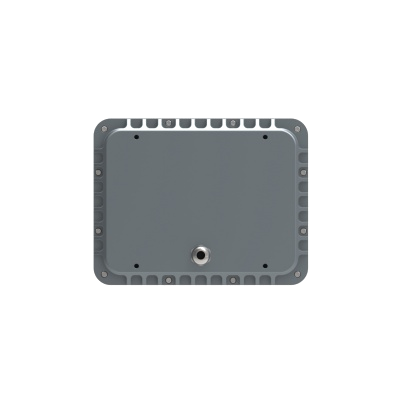
The photographs below show the actual HC-M250 front radome and rear metal housing with its communication connector.
TECHNICAL SPECIFICATIONS
Use these published values for initial product selection. Final performance should be confirmed against road geometry, mounting position and required output.
Confirm project fit| Parameter | Specification |
|---|---|
| Detection range | 10 to 300 m |
| Positioning accuracy | < 40 cm (typical) |
| Speed accuracy | 0.1 m/s (typical) |
| Frequency band | 76 to 77 GHz |
| Road coverage | Up to 8 lanes, two-way monitoring |
| Simultaneously tracked targets | Up to 128 |
| Traffic-flow accuracy | ≥95% |
| Data update time | 70 ms |
| Power supply | 12 to 24 V DC |
| Communication interface | Ethernet |
| Operating temperature | −40 to +85 °C |
| Protection rating | IP67 |
INSTALLATION & CONNECTION
HC-M250 can be deployed for roadside or overhead road monitoring. Mounting height, angle and network layout should be confirmed for the actual lane geometry and required 300 m coverage.
Use one radar for two-way traffic monitoring where the road geometry supports coverage.
Confirm the clear line of sight, target mix and site conditions during project evaluation.
Connect target and traffic-flow data to the roadside controller or central platform.
Plan power, surge protection and field cabling for the selected mounting position.
PROJECT SUPPORT
Share lane count, road width, required range, mounting position, network environment and expected data. Our team can help confirm whether HC-M250 fits the site.
TECHNICAL FAQ
It can provide target ID, coordinates, speed, length, width and trajectory information, together with traffic-flow statistics such as volume, average speed, lane occupancy and headway.
The HC-M250 supports two-way monitoring across up to eight lanes and can track up to 128 targets, subject to road geometry and installation conditions.
Radar detection does not rely on ambient light and is designed to operate through darkness, dust, rain and snow.
No. HC-M250 is intended for traffic monitoring, vehicle-road coordination, signal control and analytics. Select a suitable enforcement radar when legal metrology or evidence workflows are required.
HC-M250 uses Ethernet communication. For the detailed communication protocol, please contact our technical team and share your integration requirements.
Provide the number and width of lanes, required detection distance, mounting height and angle, target types, output requirements and intended system application.
DISCUSS AN HC-M250 PROJECT
We will use your lane layout, target range, mounting conditions and Ethernet integration requirements to recommend the next technical step.