
Doppler Radar for Traffic
In the evolving landscape of intelligent transportation systems (ITS), Doppler radar has become a cornerstone technology for accurate, real-time traffic monitoring and enforcement. From speed enforcement and incident detection to adaptive signal control and multimodal safety, Doppler radar delivers reliable performance in all weather and lighting conditions. This guide explains how Doppler radar works, why it outperforms other sensing methods in many roadway environments, practical use cases, how to evaluate radar specifications, and best practices for deployment to maximize return on investment.
1. What is Doppler Radar?
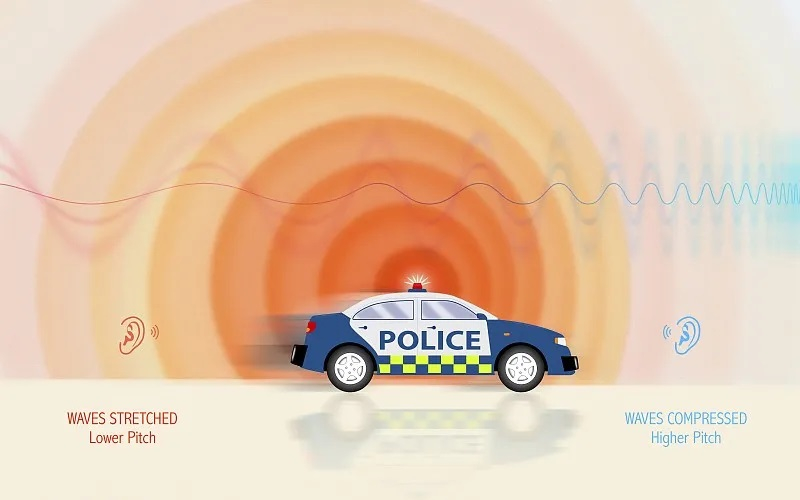
Doppler radar measures the change in frequency of a returned radio wave caused by motion—the Doppler effect. When a radar transmits a radio signal toward moving vehicles, the frequency of the signal reflected back shifts in proportion to the target’s radial velocity. By processing this frequency shift, Doppler radar calculates speed with high precision, typically within ±1 km/h (±0.6 mph) or better in traffic applications.
Modern traffic Doppler radars integrate four key components:
- RF front ends: Operate in licensed or license-free bands (commonly K-band around 24 GHz, Ka-band around 34–36 GHz; 60–77 GHz millimeter-wave in some regions).
- Processing architectures: Digital signal processing (DSP) or system-on-chip (SoC) for real-time filtering, target classification, and tracking.
- Antenna arrays: Shape beams for lane coverage, distance reach, and side-lobe suppression.
- Interfaces: Ethernet, RS-485, CAN, digital I/O, and protocol support for NTCIP, MQTT, or REST (to integrate with controllers and cloud platforms).
2. Why Choose Doppler Radar for Traffic?
Doppler radar stands out from other traffic sensing technologies for six critical advantages:
- All-weather reliability: Performance is minimally affected by rain, fog, snow, or low light—outperforming cameras in poor visibility.
- Long range & wide coverage: Detects vehicles from tens to hundreds of meters (depending on band/antenna), covering multiple lanes with one sensor.
- High speed accuracy: Measurements are direct (not inferred), enabling dependable enforcement and traffic analytics.
- Privacy by design: Senses motion and range (not faces or license plates), simplifying compliance with regulations like GDPR or CCPA.
- Low maintenance: No optical lenses to clean; resilient to glare/backlight, making it suitable for harsh roadside environments.
- Cost efficiency: One radar replaces multiple inductive loops or cameras, reducing civil works and lane closures.
3. Core Principles and Operating Modes
Doppler radar for traffic uses three primary operating modes, each optimized for specific use cases:
|
Mode |
Key Function |
Ideal Application |
|
Continuous-Wave (CW) |
Emits a constant carrier; measures speed (not range) |
Compact speed displays, handheld enforcement tools |
|
Frequency-Modulated Continuous Wave (FMCW) |
Sweeps frequency over time; measures range + speed |
Multi-target tracking, lane discrimination, intersection control |
|
Pulse-Doppler |
Uses pulsed transmissions; long-range detection + clutter rejection |
Highway enforcement, multi-lane freeway monitoring |
Additionally, most traffic radars are monostatic (transmit/receive at the same location), while bi-static setups adapt to complex geometries (e.g., tunnels, bridges).
4. Key Specifications to Compare When Selecting a System
To choose the right Doppler radar for your traffic needs, evaluate these critical specifications:
- Operating band & compliance: K, Ka, or mmWave, with region-specific certifications (FCC, CE, RED, MIC/TELEC).
- Range & lane coverage: Maximum detection distance, per-lane resolution, and minimum target speed.
- Beamwidth & pattern: Horizontal/vertical angles (affect lane selectivity and mounting height options).
- Speed accuracy: Typical ±1 km/h; confirm test methodology (moving vs. stationary).
- Target discrimination: Ability to separate vehicles in adjacent lanes, overtaking scenarios, or bidirectional traffic.
- Classification features: Vehicle class estimation (pedestrian, bicycle, car, truck, bus) via micro-Doppler and machine learning.
- Refresh rate & latency: 10–100 Hz updates (for responsive intersection/highway ramp control).
- Environmental ruggedness: IP66/67 enclosures, vibration ratings, operating temperature range, salt/fog resistance.
- Connectivity: Power (PoE, 12/24 VDC), communication (Ethernet, RS-485, CAN), protocols (NTCIP, Modbus, MQTT, REST), and cybersecurity features.
- Installation tools: Alignment aids, web UIs, auto-tuning, and diagnostics (to reduce setup time).
- Compliance: Metrology/legal-for-trade approvals (for enforcement) and EMC/safety standards.
5. Traffic and Safety Use Cases
Doppler radar supports 10+ critical traffic and safety applications, addressing diverse operational needs:
- Speed enforcement: Stationary/trailer-mounted radars for automated or officer-operated speed monitoring (FMCW radars add lane assignment for multi-lane use).
- Variable speed limit (VSL) triggering: Real-time speeds feed dynamic signs to slow traffic in congestion, work zones, or adverse weather.
- Adaptive signal control: Detects approaching vehicles, queues, and platoons—enabling phase extension, gap-out, and transit signal priority (minimizes false calls in rain/darkness).
- Stop-bar & approach detection: Replaces inductive loops (reduces maintenance/pavement cuts) and detects bicycles/pedestrians without sensitivity drift.
- Queue & incident detection: Monitors sudden speed drops/stopped vehicles on freeways/tunnels to trigger warnings and dispatch responses.
- Wrong-way driver alerts: Bidirectional detection flags vehicles entering off-ramps incorrectly, activating beacons and notifying traffic management centers (TMCs).
- Work zone safety: Portable sensors track speeds/queue lengths to improve worker safety and driver compliance.
- Multimodal analytics: Measures counts, speeds, and classes across modes (supports Vision Zero and Complete Streets initiatives).
- Parking & access control: Gate/lane presence detection improves throughput and reduces tailgating.
- Rail & transit: Grade-crossing approach detection and bus rapid transit (BRT) priority for reliable timing.
6. Doppler Radar vs. Other Detection Technologies
Doppler radar outperforms traditional sensing technologies in key scenarios—here’s how it compares:
6.1 Radar vs. Inductive Loops
Radar advantages: Avoids pavement cuts, lane closures, and loop failures; adds speed measurement and vehicle classification.
Loop limitations: High maintenance, no speed data, and disruptions during installation/repair.
6.2 Radar vs. Video Analytics
Radar advantages: Superior speed accuracy and all-weather reliability; no degradation from glare/night conditions.
Camera advantages: Rich scene understanding (for evidence); hybrid systems (radar + camera) combine both strengths.
6.3 Radar vs. Lidar
Radar advantages: Lower maintenance, longer lifespan, and better performance in fog/rain; more cost-effective.
Lidar advantages: Fine angular resolution (but sensitive to weather and dirty optics).
7. Deployment Best Practices
To maximize Doppler radar performance and ROI, follow these deployment steps:
- Site survey:
Evaluate mounting height (4–8 m for intersections, 6–12 m for freeway gantries), lane offset, and line-of-sight.Avoid metallic clutter or swaying vegetation in the radar’s main lobe.
- Beam alignment:
Use built-in alignment tools or spectrum plots.Compensate for azimuth errors (small shifts affect radial speed measurements) via firmware or cosine correction factors.
- Lane mapping & calibration:
Define lane polygons and set speed thresholds, direction filters, and hold times (minimizes false positives).
- Power & networking:
Use PoE for permanent sites; ensure portable systems have battery/solar capacity and low-power sleep modes.Add surge protection and proper grounding.
- Data integration:
Stream data via MQTT/REST to cloud dashboards (for long-term analytics).Support NTCIP objects or contact closures for controller integration.
- Security & reliability:
Enable TLS, certificate management, and user roles.Monitor device health/firmware via SNMP or vendor APIs.
- Validation & testing:
Compare outputs to calibrated speed trailers or traceable references.Test across day/night, rain, and varying traffic densities; document accuracy for compliance.
8. Regulatory and Privacy Considerations
- Radio compliance: Ensure the radar meets local RF regulations (e.g., FCC in the U.S., CE in the EU).
- Enforcement approval: Verify metrology/legal-for-trade certifications (critical for automated speed enforcement).
- Privacy protection: Leverage radar’s “privacy by design” (no personally identifiable imagery) to align with GDPR/CCPA.
- Enforcement chain-of-custody: Maintain secure time stamping and audit logs for automated enforcement data.
9. How to Choose the Right Doppler Radar
Follow this 6-step framework to select a system that fits your needs:
- Define the application: Enforcement, detection, analytics, or multimodal safety? (Each requires different modes/optics.)
- Determine coverage: Number of lanes, bidirectionality, range, and mounting constraints (e.g., tunnels, curved roads).
- Specify performance: Minimum detectable speed, accuracy, lane discrimination, classification categories, and latency.
- Match interfaces: Controller protocols (NTCIP, Modbus), backhaul (cellular, fiber), and power (PoE, 12/24 VDC).
- Plan lifecycle costs: Installation simplicity, maintenance intervals, remote diagnostics, and firmware upgrade paths.
- Verify certifications: RF, EMC, environmental, and metrology certificates for your region.
10. Measuring ROI for Doppler Radar
Organizations evaluate ROI across five key areas:
- Reduced installation/maintenance costs: 20–40% savings compared to inductive loops (no pavement work or frequent repairs).
- Improved traffic flow: Fewer false calls and better signal timing reduce corridor delays and emissions.
- Enhanced safety: Speed feedback and enforcement lower crash severity (aligns with Vision Zero goals).
- Extensibility: One sensor supports speed, counts, classification, and incident alerts (eliminates need for multiple devices).
- Long-term reliability: Low maintenance and high uptime reduce operational disruptions.
Conclusion
Doppler radar has matured into a proven, cost-effective backbone for modern traffic systems. Its ability to deliver precise speed data, consistent detection, and resilient performance in adverse conditions makes it the preferred choice for enforcement, adaptive control, and safety applications. By understanding core principles, key specifications, and deployment best practices, agencies and integrators can select Doppler radar solutions that improve safety, reduce congestion, and deliver strong long-term ROI. If you’re upgrading detection or enforcement infrastructure, Doppler radar should be at the top of your shortlist.