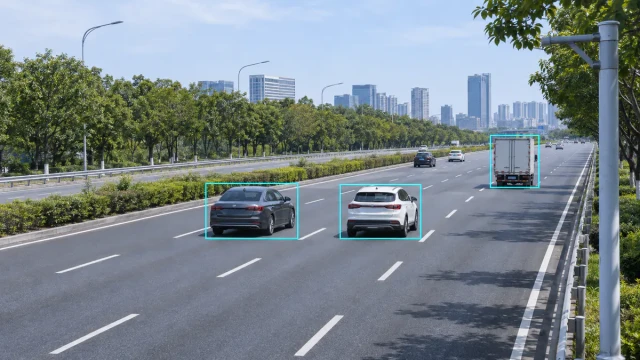

Traffic light sensors are used to detect vehicles, bicycles and other road users approaching or waiting at a signalized intersection. The detection results are sent to the traffic signal controller, which uses them to register demand, extend a green phase, identify an acceptable traffic gap or terminate a phase.
The sensor itself does not normally decide which signal turns green. Its role is to provide reliable detection data. The controller then applies the configured timing plan and control logic.
What Are Traffic Light Sensors?
Traffic light sensors are vehicle-detection devices installed near intersections. Depending on the technology and system design, they may be embedded in the pavement, mounted above the road, installed beside the carriageway or integrated with cameras and roadside control equipment.
A basic detector may provide only a binary vehicle-present signal. More capable sensors can also provide traffic count, speed, lane position, occupancy, queue length, headway, coordinates and vehicle trajectories.
Typical detection functions include:
- Registering a vehicle call for a signal phase
- Detecting vehicles waiting near the stop line
- Extending green time while traffic is still arriving
- Identifying gaps between vehicles
- Supporting safer phase termination on high-speed approaches
- Measuring traffic flow, speed and lane occupancy
- Providing queue and approach data to traffic-management systems
How Do Traffic Light Sensors Work?
A typical actuated intersection follows a simple information chain:
- A vehicle enters a configured detection zone.
- The sensor detects the vehicle and generates an output.
- The detector output is transmitted to the traffic signal controller.
- The controller registers a call or extends an active phase.
- The signal timing logic determines when and how the requested movement receives service.
The resulting signal response depends on the controller configuration, minimum green time, maximum green time, pedestrian phases, coordination plan, priority rules and safety intervals. A detector call does not necessarily produce an immediate green signal.
Presence Detection and Pulse Detection
Presence detection
Presence detection keeps the detector output active for as long as a vehicle remains inside the detection zone. This is commonly used near the stop line because a vehicle may need to remain detected while waiting through another signal phase.
If the detection zone or sensor configuration cannot reliably detect stationary vehicles, the controller may lose the call before the vehicle is served. Reliable stopped-vehicle detection is therefore an important requirement for stop-line applications.
Pulse or passage detection
Pulse detection produces a short output when a vehicle enters or crosses the detection zone. It is frequently used for vehicle counting, speed measurement, advance detection and applications where continuous presence information is not required.
The correct mode depends on the controller logic and the purpose of each detection zone.
Stop-Line Detection and Advance Detection
Stop-line detection
Stop-line detectors identify vehicles waiting immediately upstream of the intersection. They are commonly used to place a call for a side street, protected turn or other actuated movement.
The detector must cover the intended lane area without creating unnecessary calls from adjacent lanes. Where motorcycles and bicycles must also be detected, installation and sensitivity should be verified using the actual road users expected at the site.
Advance detection
Advance detectors are positioned farther upstream. They can be used to extend an active green phase, measure approaching traffic or help the controller identify suitable gaps.
On higher-speed approaches, advance detection may also support controller strategies intended to reduce difficult phase changes for vehicles that are too close to stop comfortably but too far away to clear the intersection before the signal changes.
Types of Traffic Light Sensors
Inductive loop detectors
Inductive loops are installed in or below the pavement. A vehicle changes the electromagnetic characteristics of the loop, allowing the detector electronics to register its presence or passage.
Loops are widely used and can provide reliable lane-specific detection. However, installation usually requires pavement cutting, and road repairs or cable damage can affect long-term operation.
Radar and microwave sensors
Radar sensors transmit radio waves and analyze the returned signal from vehicles or other targets. Depending on the radar design and processing method, the sensor may detect motion, stationary presence, range, speed, direction, lane position or target trajectory.
Radar is mounted above or beside the road and normally avoids pavement cutting. It can cover multiple lanes, but detection zones, mounting height, orientation and roadside obstructions must be considered carefully.
Video detection cameras
Video detection systems analyze images from cameras overlooking the intersection. Detection zones can usually be configured through software, making them flexible for different lane arrangements.
Performance can be affected by glare, shadows, nighttime lighting, rain, fog, dirty lenses, occlusion and camera movement. The camera view and processing configuration therefore require regular validation.
Magnetic sensors
Magnetic sensors detect changes in the Earth’s magnetic field caused by a vehicle. Some versions are embedded in the pavement, while others may use wireless communication to reduce cabling.
They can provide localized vehicle detection but may require multiple sensors when detailed lane coverage or queue detection is needed.
LiDAR and laser sensors
LiDAR uses laser measurements to create distance or spatial information about objects. It can provide detailed target position and classification data, but installation cost, field of view and performance in difficult environmental conditions must be evaluated.
Infrared, ultrasonic and acoustic sensors
These technologies may be used for vehicle presence, passage or traffic measurement in selected applications. Their suitability depends on mounting conditions, coverage requirements, weather exposure and the type of information required by the controller.
Comparison of Common Intersection Sensors
| Technology | Typical strengths | Important considerations |
|---|---|---|
| Inductive loop | Lane-specific detection, established technology, presence detection | Requires pavement work; road repairs and cable damage may cause failures |
| Radar | Non-intrusive installation, multi-lane coverage, speed and target data | Requires correct alignment, detection-zone design and interface configuration |
| Video | Flexible software zones, visual verification, broad intersection view | Lighting, weather, occlusion and lens condition can affect performance |
| Magnetic | Compact, localized detection, some wireless installation options | Multiple units may be needed for larger detection areas |
| LiDAR | Detailed position and spatial information | Cost, coverage, weather and integration requirements |
How Radar Supports Traffic Signal Control
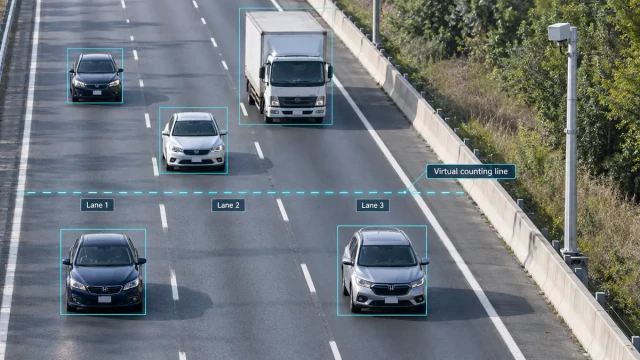
A radar sensor can be configured with one or more virtual detection zones covering approaching lanes, stop-line areas or turning movements. When a target satisfies the conditions of a zone, the radar can send a presence signal, event output or target data to the control system.
More advanced radar systems may provide:
- Vehicle range and relative position
- Approach speed and direction
- Lane association
- Multi-target tracking
- Queue and occupancy information
- Target coordinates and trajectories
These outputs can support conventional signal-controller inputs or higher-level traffic-management applications. However, the radar interface must be designed around the controller’s accepted protocols and input requirements.
Stationary detection capability should also be confirmed for stop-line use. Some motion-oriented radar designs are optimized for approaching vehicles and may not maintain an output after a vehicle stops.
Actuated Signals and Adaptive Traffic Control Are Not the Same
An actuated traffic signal responds to detector calls and gaps using configured controller timing. An adaptive traffic-control system analyzes traffic conditions across one or more intersections and changes timing parameters or coordination strategies more dynamically.
Installing a new sensor does not automatically make an intersection adaptive. Adaptive operation requires suitable detection coverage, communications, controller compatibility, data processing and system-level control logic.
Common Detection Problems
Many traffic light sensor problems are caused by installation or configuration rather than by the basic sensing technology. Common issues include:
- Detection zones that do not cover the actual stopping position
- False calls caused by adjacent lanes or roadside movement
- Missed motorcycles, bicycles or small vehicles
- Loss of stopped-vehicle detection
- Occlusion between large and small vehicles
- Camera glare, low light or dirty lenses
- Damaged loop wiring or pavement deterioration
- Incorrect radar mounting angle or height
- Communication delay or incompatible controller interfaces
- Detection settings that no longer match a changed lane layout
Traffic Light Sensor Design Checklist
Before selecting and installing a detector, the system designer should define:
- The movements and lanes that must be detected
- Whether stopped-vehicle presence is required
- The required detection distance and coverage width
- Whether speed, count, queue or trajectory data is needed
- The controller input type and communication protocol
- The mounting location and available infrastructure
- Expected weather, lighting and roadside conditions
- Requirements for motorcycles, bicycles and other road users
- Acceptable latency and update rate
- Testing and maintenance procedures
Field validation should include different lanes, speeds, vehicle sizes, stopping positions and environmental conditions. Detection zones should be checked again after resurfacing, lane changes or equipment movement.
Multi-Lane Radar Data for Signal and ITS Integration
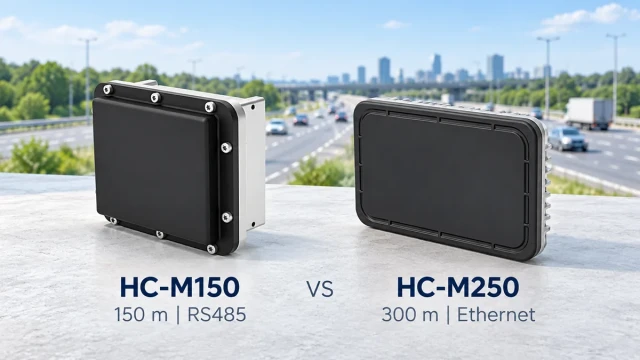
The WaveLogic HC-M150 traffic radar is designed to provide multi-lane target data including speed, position and trajectory information. This type of output can support traffic-monitoring and signal-integration projects that require more information than a simple vehicle-present contact.
Whether it is used as a detector input, a data source for an edge controller or part of a larger intelligent transportation system depends on the project architecture and controller interface.
For more information about traffic measurement and multi-lane target data, see the traffic flow monitoring solution.
Frequently Asked Questions
Do traffic lights have sensors?
Many signalized intersections use vehicle detectors, although not every traffic light is actuated. Some intersections operate on fixed timing, while others combine fixed coordination plans with detector inputs.
Are traffic light sensors cameras?
Some intersections use video cameras for detection, but cameras are only one option. Inductive loops, radar, magnetic sensors, LiDAR, infrared and other technologies may also be used.
Where are traffic light sensors installed?
Sensors may be embedded in the pavement, mounted on signal poles or mast arms, positioned beside the road or installed upstream from the stop line. The location depends on the required detection function.
Can traffic light sensors detect motorcycles and bicycles?
They can, but reliable detection depends on sensor technology, sensitivity, zone placement and installation. Detection should be tested using the types of motorcycles and bicycles expected at the site.
How does a sensor change the green light?
The sensor sends a vehicle call or detection output to the traffic signal controller. The controller applies its programmed timing and safety logic to determine when the requested phase can receive green.
Do traffic light sensors take pictures?
Inductive loops, radar and magnetic detectors do not take photographs. A video-based detector uses images for detection, but its purpose and recording configuration are separate from red-light enforcement. For enforcement-specific information, see our guide to red-light cameras and traffic sensors.
Conclusion
Traffic light sensors provide the demand and traffic information required by actuated and adaptive signal-control systems. The most suitable technology depends on whether the project needs simple vehicle presence, stopped-vehicle detection, speed measurement, queue information or detailed multi-target data.
Reliable operation requires more than selecting a sensor. Detection-zone design, mounting, controller integration, field validation and ongoing maintenance all influence how effectively an intersection responds to real traffic conditions.