
Speed Enforcement Camera: The Ultimate Guide to Technology, Safety, and Regulations
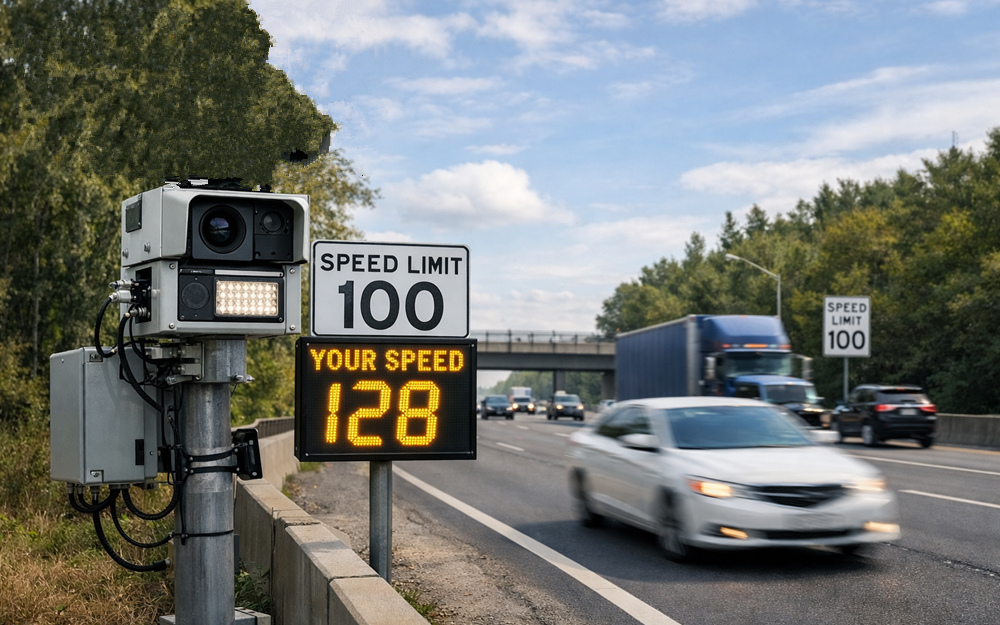
In the modern era of urban planning and road safety, few devices are as ubiquitous—or as polarizing—as the speed enforcement camera. Often referred to simply as speed cameras, these high-tech sentinels play a critical role in managing traffic flow and reducing fatalities.
Whether you are a daily commuter concerned about accidental fines or a city official looking into traffic management solutions, understanding the nuances of speed enforcement technology is essential. This guide explores how these systems work, the various types deployed globally, and their measurable impact on public safety.
What is a Speed Enforcement Camera?
A speed enforcement camera is an automated system designed to detect vehicles exceeding the legal speed limit. Once a violation is identified, the camera captures photographic or video evidence of the vehicle, including its license plate. This data is then processed to issue a citation (ticket) to the registered owner.
The primary objective of these cameras is not merely “revenue generation,” as critics often claim, but deterrence. By creating a “perceived certainty of detection,” authorities can effectively encourage drivers to moderate their speed in high-risk zones.
How Speed Enforcement Cameras Work
Modern speed cameras use a variety of sophisticated technologies to ensure accuracy and reliability. While the end goal is the same, the method of detection varies.
1. Radar Technology (Doppler Effect)
Most traditional speed cameras use Radar (Radio Detection and Ranging). The device emits radio waves that bounce off a moving vehicle. By measuring the change in frequency of the returned waves—a phenomenon known as the Doppler Effect—the system calculates the vehicle’s speed with high precision.
2. LiDAR Technology (Laser)
LiDAR (Light Detection and Ranging) uses pulses of infrared light instead of radio waves. It calculates speed by measuring the time it takes for several light pulses to hit a vehicle and reflect back. LiDAR is often preferred in heavy traffic because its narrow beam can target a specific vehicle more accurately than radar.
3. Piezo Sensors
Some fixed speed enforcement cameras use physical sensors embedded in the road surface. These piezoelectric sensors are spaced a specific distance apart. When a car drives over them, the system measures the time interval between the first and second sensor hit to determine the speed ($v = frac{d}{t}$).
4. Automatic Number Plate Recognition (ANPR)
ANPR is the “brain” behind the camera. Once a speed violation is triggered, ANPR software reads the characters on the license plate, allowing the system to automatically cross-reference vehicle registration databases.
Common Types of Speed Enforcement Cameras
Not all cameras are created equal. Depending on the environment—be it a school zone or a major highway—different hardware is utilized.
Average Speed Cameras: The New Standard
A growing trend in road safety is the Average Speed Check. Unlike fixed cameras that catch a “snapshot” of speed, these systems use two or more cameras over a stretch of road (often several kilometers). They record the time you pass Point A and Point B. If your average speed exceeds the limit, you receive a fine. This prevents the “brake-and-speed” behavior common with traditional cameras.
The Impact on Road Safety: Does It Work?
The implementation of speed enforcement cameras is often met with public debate. However, the data largely supports their effectiveness. According to various global studies:
-
Reduction in Accidents: Fixed speed cameras have been shown to reduce fatal and serious collisions by as much as 30% to 40% in the immediate vicinity of the installation.
-
Behavioral Modification: The presence of cameras encourages a “halo effect,” where drivers maintain lower speeds even after they have passed the camera.
-
School Zone Protection: Mobile speed enforcement in school zones significantly decreases the likelihood of pedestrian-related injuries.
Navigating Regulations and Contesting Fines
For drivers, receiving a notice in the mail is never pleasant. It is important to understand your rights and the regulations governing these devices.
Accuracy and Calibration
Every speed enforcement camera must undergo periodic calibration to ensure its readings are legally defensible. If a camera has not been calibrated within the legally mandated timeframe, the evidence may be inadmissible in court.
Signage Requirements
In many jurisdictions (such as parts of the UK and Australia), laws require that “Speed Camera Ahead” signs be clearly posted. In the United States, regulations vary by state; some states ban automated enforcement entirely, while others embrace it.
How to Legally Avoid Speeding Fines
The only foolproof way to avoid a ticket is to adhere to the posted speed limits. However, technology can assist:
-
GPS Apps: Applications like Waze or Google Maps often alert drivers to known fixed camera locations.
-
Cruise Control: Using your vehicle’s cruise control helps maintain a steady speed and prevents “speed creep” on downhill stretches.
The Future of Speed Enforcement: AI and Connectivity
As we move toward “Smart Cities,” speed enforcement cameras are becoming part of an integrated IoT (Internet of Things) ecosystem.
-
AI Integration: Future cameras will be able to detect not just speeding, but also distracted driving (phone use) and seatbelt violations simultaneously.
-
Weather-Adaptive Limits: Some advanced systems can automatically adjust enforcement thresholds based on real-time weather conditions, such as heavy rain or fog.
-
Data-Driven Placement: Cities are now using “Big Data” to identify “hotspots” where speeding is most likely to occur, allowing for more efficient placement of mobile units.
Speed Enforcement Camera: Frequently Asked Questions (FAQ)
To help you better understand the impact and regulations surrounding speed enforcement cameras, we’ve compiled a list of the most common questions drivers and residents ask in 2026.
1. Are speed enforcement cameras accurate?
Yes, modern speed cameras are incredibly precise. Most systems use LiDAR or Radar technology that is calibrated to within $pm$1 mph (or $pm$2 km/h). In 2026, many jurisdictions have implemented “Smart Calibration” which uses AI to run self-diagnostic checks daily. However, if you believe a camera was malfunctioning, you have the legal right to request its most recent calibration certificate during an appeal.
2. Do speed cameras work at night or in bad weather?
Absolutely. Modern speed enforcement cameras are equipped with high-resolution infrared (IR) sensors and advanced thermal imaging. This allows them to capture clear images of license plates in total darkness, heavy rain, or even fog without the need for a bright, distracting flash.
3. Will I get a ticket if I’m only 1 or 2 mph over the limit?
Technically, any speed over the limit is a violation. However, many regions operate with a “discretionary threshold” (often 10% + 2 mph) to account for slight speedometer variances. In 2026, some “Zero Tolerance” zones (especially near schools) have removed these buffers, so it is always safest to stick exactly to the posted limit.
4. Can a speed camera catch multiple cars at once?
Yes. Older film-based cameras could struggle with multiple targets, but today’s multi-lane tracking radar can monitor up to 32 vehicles simultaneously across six lanes of traffic. The system uses “target tracking” to assign a specific speed to each individual vehicle ID, ensuring that the person speeding is correctly identified even in heavy traffic.
5. Does a speed camera ticket add points to my license?
This depends entirely on your local laws.
-
In many U.S. states, camera tickets are treated as civil violations (like a parking ticket), meaning you pay a fine but receive no points.
-
In the UK, Australia, and certain European countries, these are moving violations that will result in points and potentially higher insurance premiums.
6. Can I “trick” a camera by changing lanes or hiding my plate?
No. Modern software uses perspective correction and multiple camera angles to track a vehicle’s path even if it switches lanes. Furthermore, using “plate flippers” or reflective sprays is highly illegal and, in 2026, AI-enhanced cameras can often digitally reconstruct the characters on a plate even if they are partially obscured or treated with anti-photo chemicals.