
Traffic Enforcement: How Radar Technology Solves Real-World Road Safety Challenges
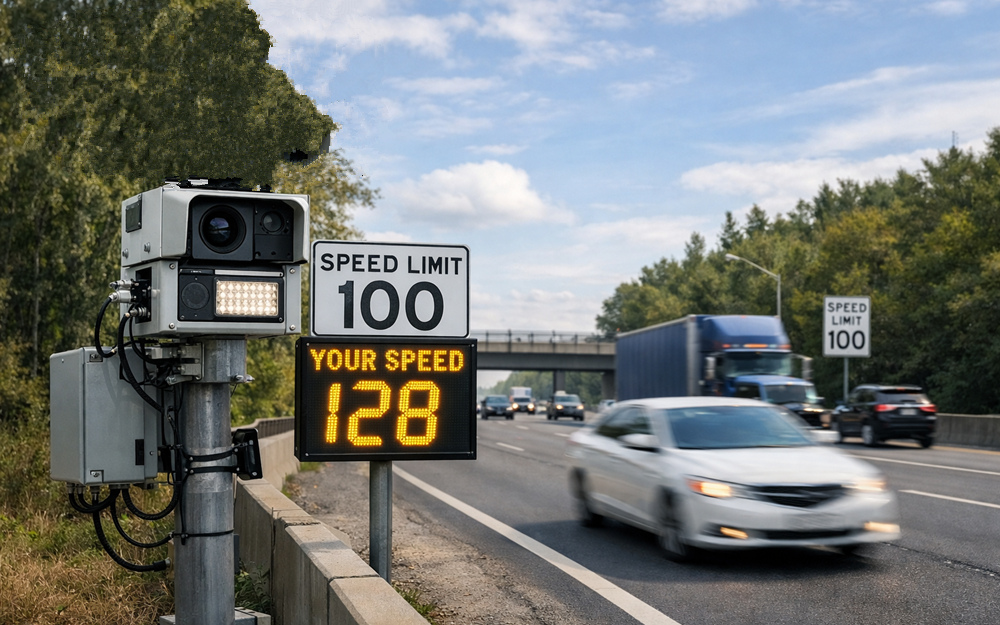
Traffic enforcement is no longer a matter of sporadic patrols and visual judgment. As road networks expand, traffic density increases, and public expectations for safety rise, enforcement authorities face a set of practical problems that cannot be solved by manpower alone. Traffic radar has become one of the most reliable tools to address these challenges, not because it is technologically sophisticated in theory, but because it works consistently in real-world conditions.
This article focuses on traffic enforcement from an application perspective. Rather than discussing technical specifications or future concepts, it examines how traffic radar is used today to solve concrete enforcement problems on highways, urban roads, intersections, tunnels, and special traffic zones.
The Core Problem of Traffic Enforcement: Consistency and Coverage
At its core, traffic enforcement is about consistency. Laws are effective only when drivers believe violations will be detected fairly and reliably. Traditional enforcement methods struggle with three fundamental issues:
-
Limited human coverage – Traffic police cannot be present everywhere at all times.
-
Subjective judgment – Visual estimation of speed or behavior can be disputed.
-
Environmental constraints – Darkness, rain, fog, or heavy traffic reduce visibility and enforcement effectiveness.
Traffic radar directly addresses these issues by providing continuous, objective, and environment-independent monitoring. Once deployed, radar-based traffic enforcement operates regardless of time, weather, or traffic volume.
Speed Enforcement: Addressing the Most Common Traffic Violation
Speeding remains the most widespread traffic violation worldwide and a leading contributor to severe accidents. The challenge is not defining speed limits, but enforcing them consistently across different road scenarios.
Multi-Lane Speed Monitoring
On modern highways and arterial roads, enforcement systems must monitor multiple lanes simultaneously. Traffic radar enables authorities to:
-
Measure the speed of multiple vehicles in parallel
-
Associate speed data with the correct lane and vehicle
-
Detect violations even in dense traffic conditions
This is particularly critical on roads where overtaking, lane changes, and varying traffic flow make manual enforcement impractical.
High-Speed and Urban Speed Enforcement
Traffic radar is equally effective in two very different environments:
-
High-speed expressways, where accurate measurement at long distances is essential
-
Urban roads, where short detection ranges and frequent vehicle interactions occur
In both cases, radar ensures that speed enforcement remains accurate and unbiased, reducing disputes and increasing compliance.
Traffic Enforcement at Intersections: Beyond Speed
Intersections are among the most dangerous points in any road network. Enforcement at these locations goes far beyond speed monitoring.
Red-Light Violation Detection
Running red lights is a major cause of severe urban accidents. Radar-based traffic enforcement systems can:
-
Monitor vehicle movement relative to stop lines
-
Detect violations even when vehicles accelerate suddenly
-
Operate reliably in poor lighting or adverse weather
Unlike camera-only solutions, radar continues to detect motion accurately in rain, fog, or glare-heavy environments.
Intersection Behavior Monitoring
In complex intersections, enforcement authorities often need to understand traffic behavior patterns rather than isolated events. Radar supports:
-
Detection of illegal turns
-
Monitoring of vehicles entering restricted lanes
-
Continuous data collection for enforcement analysis
This enables enforcement agencies to identify high-risk behaviors and deploy targeted countermeasures.
Data-Driven Traffic Enforcement Operations
Modern traffic enforcement is not only about issuing violations; it is also about understanding patterns and improving strategies.
Continuous Enforcement Data Collection
Radar-based systems provide consistent traffic data that supports:
-
Identification of high-risk locations
-
Time-based enforcement optimization
-
Evaluation of enforcement effectiveness
This allows authorities to move from reactive enforcement to proactive safety management.
Supporting Transparent Enforcement
Objective radar measurements reduce disputes and increase public trust. Drivers are more likely to comply with enforcement measures when they perceive them as:
-
Fair
-
Consistent
-
Based on reliable evidence
Traffic radar strengthens the credibility of enforcement programs by removing ambiguity from violation detection.
Reducing Enforcement Resource Pressure
Traffic enforcement agencies worldwide face budget and staffing constraints. Radar-based solutions help alleviate these pressures by:
-
Reducing the need for continuous on-site patrols
-
Allowing remote or automated enforcement
-
Freeing personnel for higher-value safety tasks
This operational efficiency is one of the key reasons radar has become central to modern traffic enforcement strategies.
Traffic Enforcement as a Safety Tool, Not Just a Penalty System
Effective traffic enforcement is ultimately about behavior change, not punishment. Radar-based traffic enforcement contributes to safer roads by:
-
Increasing perceived enforcement presence
-
Encouraging long-term compliance with speed limits
-
Reducing accident rates in monitored areas
When drivers know that violations are consistently detected, risky behavior decreases, even outside enforcement zones.
Why Traffic Radar Is Central to Modern Traffic Enforcement
Traffic enforcement faces real-world challenges that cannot be solved by policy alone. Speeding, red-light violations, and dangerous driving behaviors persist because enforcement coverage is limited and inconsistent.
Traffic radar addresses these challenges directly. It provides continuous, objective, and reliable enforcement across diverse road environments, from high-speed highways to urban intersections and special safety zones. By focusing on practical application rather than theoretical capability, traffic radar has proven to be one of the most effective tools for improving road safety and supporting modern traffic enforcement operations.