Skip to content
WaveLogic

INTELLIGENT TRANSPORTATION · TRAFFIC MONITORING

Traffic flow monitoring
Turn every lane into usable data

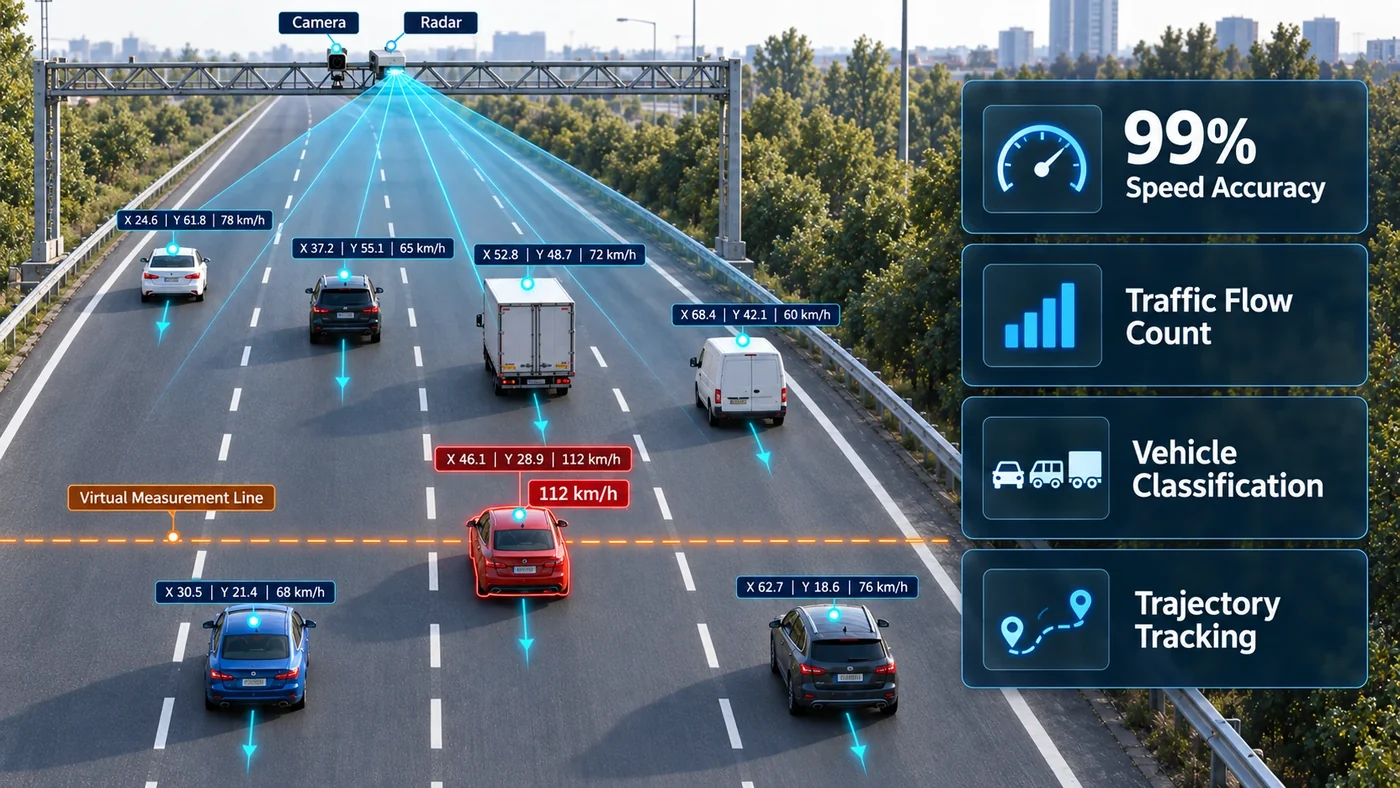
Continuously detect and track vehicles across multiple lanes, then provide target position, speed, trajectory and lane-level statistics to the traffic management platform.

Traffic radar monitoring and tracking vehicles across multiple lanesIllustrative operating scene
Multi-laneContinuous vehicle detection
Target-levelSpeed, position and direction
Lane-levelFlow, average speed and occupancy
Continuous tracksTarget ID and trajectory

WHY RADAR DATA

From counting vehicles
to understanding the road

Traffic operators need more than a total count. They need to know where each vehicle is, how fast it is moving and how every lane is performing. Radar follows targets throughout the monitored area and supplies both vehicle-level detections and aggregated lane statistics to the existing traffic system.

Designed for road traffic monitoring, live operating dashboards, traffic analysis, event systems and signal-control projects.

DATA OUTPUT

One sensor, two levels of traffic information

Target data supports detection and tracking. Lane statistics help the platform understand traffic conditions over time.

01 · VEHICLE-LEVEL DATA

Information for each vehicle

Live targets
Target IDMaintain identity while tracking
X / Y positionLocate the vehicle in the scene
Speed and directionRead current motion state
Class and trajectorySupport analysis and classification

Available fields depend on the selected radar and integration protocol.
02 · LANE-LEVEL STATISTICS

Operating data for each lane

Traffic statistics
Traffic volumeCount vehicles passing a lane
Average speedMeasure lane operating efficiency
OccupancyEstimate how busy the lane is
Time headwayAnalyse spacing between vehicles

Statistical performance should be validated against the road and installation conditions.

SYSTEM INTEGRATION

Connect radar data to the existing platform

The radar handles front-end detection while the customer's controller and platform retain the project logic.

STEP 01

Traffic radar

Detects and tracks vehicles and outputs target data plus traffic-flow information.

STEP 02

Roadside controller

Receives the radar stream and performs forwarding or project-specific processing.

STEP 03

Traffic platform

Displays traffic conditions, supports analysis and coordinates with existing systems.

Contact us for detailed communication protocols and integration documentation.

RADAR SELECTION

Select by range, road geometry and interface

Both models support traffic monitoring; the right choice depends on the site and host-system architecture.

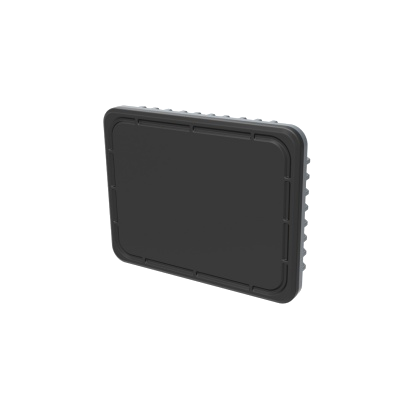
HC-M150 multi-lane traffic radar
MULTI-LANE TRAFFIC RADAR

HC-M150

For conventional multi-lane monitoring with target-level output and traffic statistics.

Up to 150 m · RS485View HC-M150 →
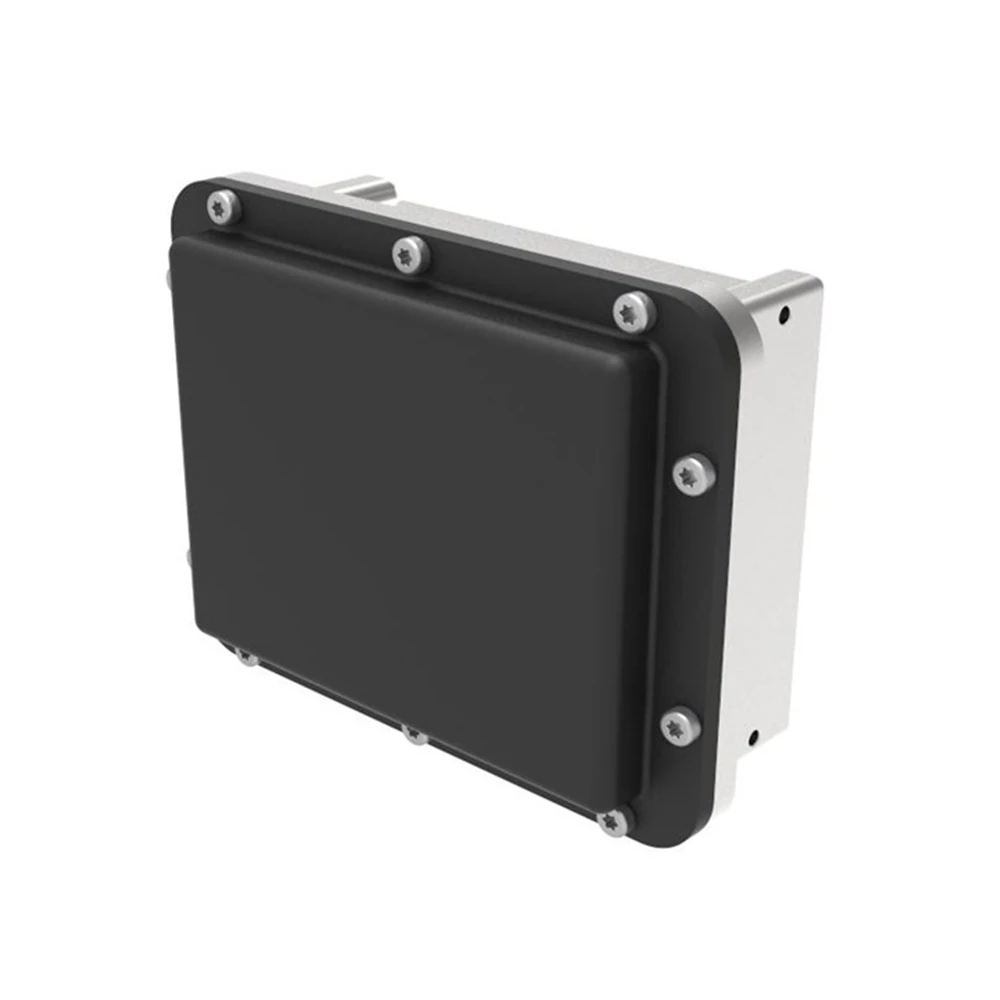
HC-M250 long-range traffic radar
LONG-RANGE TRAFFIC RADAR

HC-M250

For roads requiring longer detection range and Ethernet connectivity.

Up to 300 m · EthernetView HC-M250 →

BEFORE DEPLOYMENT

Performance begins with site information

Confirm the road, mounting and system conditions before choosing the radar and installation method.

01 / ROAD

Lanes and traffic directions

Define the monitored lanes, road width, curvature, driving directions and required range.

02 / INSTALLATION

Position, height and obstructions

Evaluate roadside or median mounting and possible obstruction by signs, vegetation or large vehicles.

03 / SYSTEM

Power, communication and platform

Confirm site wiring, host interface and the target or statistical fields the platform needs.

PROJECT ENQUIRY

Share the road conditions and data requirements

Provide the lane count, mounting position, detection range and host interface. We will help evaluate the radar and integration approach.