Traffic radar can provide useful vehicle-classification information, but the available groups must match the job you need to do. A detector reporting small and large vehicles can support broad traffic composition statistics. That does not establish that it separately identifies buses, delivery vans, articulated trucks or an agency’s axle-based categories.
Start with the classes required by the project, check the radar’s actual output definitions, and then validate individual passages against a video reference. This guide explains how to interpret broad classifications, investigate uncertain results and specify a test that measures more than the total vehicle count.
1. Start with the actual class list
Ask what each reported label means before asking for a classification percentage. In the HC-M150 configuration reviewed for this guide, the categories include undefined, pedestrian, a combined two-wheeler group, small vehicle and large vehicle. Motorcycles and bicycles belong to the same two-wheeler group.
| Reported group | How to interpret it | What to confirm for the project |
|---|---|---|
| Small vehicle | A broad vehicle group | Which reference vehicles belong in the agreed group; do not assume an exact passenger-car registration category |
| Large vehicle | A broad group for larger vehicles | Whether the project requires separate bus, truck or trailer categories that the group does not provide |
| Two-wheeler | A combined group containing motorcycles and bicycles | Whether that combined result is sufficient for the required traffic report |
| Pedestrian | A road-user category separate from vehicle groups | Whether pedestrians should appear in the application’s records and totals |
| Undefined | An observation without a specific assigned group | How to retain and report it without silently forcing it into a known class |
The HC-M150 multi-lane traffic radar supplies target and traffic information for integration. Confirm the definitions used by the delivered firmware and by the receiving software. An interface label added by the platform must not be mistaken for an additional class produced by the radar.
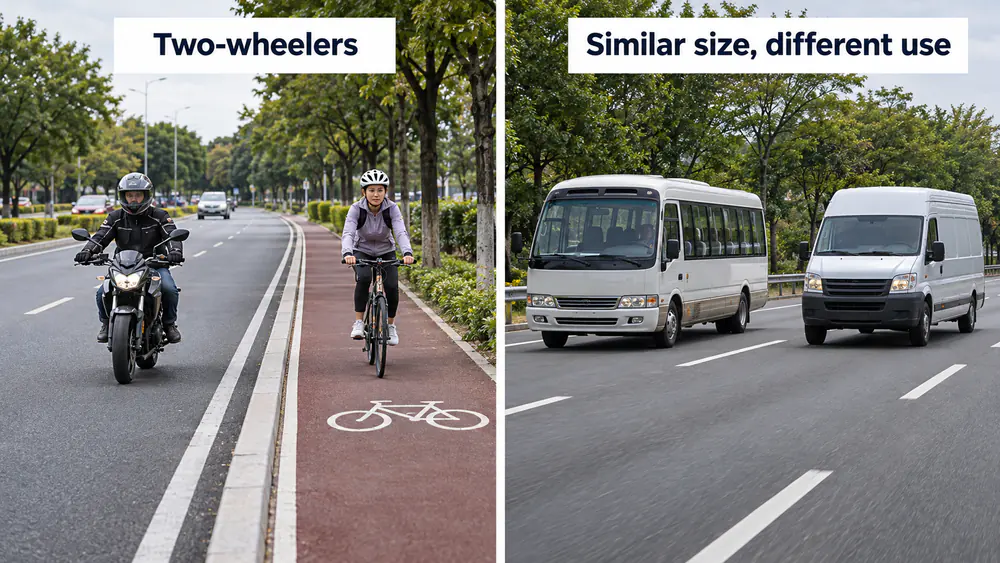
Agree what each output group means before comparing it with a more detailed vehicle taxonomy.
Similar body size does not imply the same vehicle use. A passenger minibus and a delivery van can be comparable in size while belonging to different operational categories. If the report needs that distinction, agree how it will be obtained and verified.
2. Separate detection, tracking and classification
A vehicle can be detected and have a usable position and speed while its type is undefined or incorrect. Equally, a plausible class label does not establish that the record belongs to the right vehicle.
Check three questions independently:
- Detection: did the actual road user produce an observation at the required location?
- Association: does the object record correspond to that vehicle throughout the part of the passage being evaluated?
- Classification: does the selected record carry the correct label under the agreed definitions?
If two vehicles merge into one object, the classification result may be unusable even when the combined object receives a label. If one vehicle creates duplicate passage records, both records may show the same apparently correct type while corrupting the totals. The multi-vehicle separation guide explains how to inspect close following, adjacent-lane vehicles and truck occlusion.
Preserve undefined results during validation. Removing them before calculating performance can make the report look better while hiding cases the application could not classify.
3. Length groups are not axle-based or appearance-based categories
Different systems can classify vehicles using different information. Size-related measurements, radar-return features and tracking information can support broad grouping; cameras can add visible appearance, while suitable road sensors can provide axle information. The exact method and output depend on the device.
A size-related group should not be relabelled as a more detailed vehicle identity without evidence. Confirm what any reported length or size field represents before applying thresholds. A field used by a particular configuration may have classification-related semantics; its name alone does not establish a precise physical bumper-to-bumper length measurement.
The FHWA vehicle-classification definitions distinguish categories using vehicle purpose, axles and unit configuration. A broad small/large output does not automatically supply those distinctions. The FHWA also documents length-based and axle-related records separately in its traffic monitoring data formats.
If a project requires detailed freight reporting, axle classes, a separate bus count or another specific taxonomy, compare that requirement with the actual available observations. Where another sensing method is needed, plan its integration and matching rather than simply renaming the radar’s existing groups.
4. Check whether the classification problem follows the road geometry
Review where and under what traffic conditions errors occur. An error concentrated in a distant lane, beside a truck or during close following needs a different investigation from a consistent mismatch between the platform’s labels and the agreed class definitions.
Useful checks include:
- Mounting and coverage: are the required road users observable at the evaluation position?
- Lane assignment: is a correct vehicle record being compared with the reference vehicle from the wrong lane?
- Occlusion and separation: is a weak or hidden target missing, or are two road users being represented by one record?
- Record interpretation: does the receiving software map the reported categories consistently?
Use the HC-M150 installation and alignment guide when an issue is tied to mounting position, lane calibration or the measurement location. Improve an identified observation problem before changing class mapping to make the totals resemble expectations.
Keep enough reference material to identify the actual vehicle. If the reference camera cannot show the target clearly, mark that passage as unreviewable and report that exclusion; do not assign a convenient reference class to it.
5. Decide when the application will use a class result
A tracking system can update attributes as observations accumulate during a passage. Whether a particular product revises a classification, and how the receiving application selects its final value, should be confirmed for the delivered configuration.
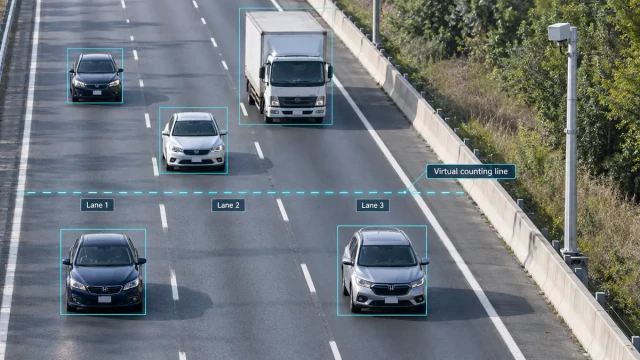
Define one classification decision for each vehicle passage. If the project evaluates results at a measurement line, use the corresponding passage record and the agreed rule for selecting the class. Do not compare an early approach label for some vehicles with a later label for others without documenting that method.
Confirm how the application handles a missing label, an undefined result, a change in object ID and multiple updates for the same vehicle. A platform that counts every update as a new classified vehicle can produce incorrect reports even when the source observations are reasonable.
The HC-M150 vehicle-data integration guide distinguishes target updates, measurement-line information and periodic statistics. Check which of these sources the report actually uses, and whether a type value describes a tracked object, a passage or a statistical group.
6. Validate each class against individual reference vehicles
Agree the reference definitions and the observation position before collecting the sample. Record a clear video and the matching radar or platform records over the same period, with enough time alignment to identify each passage. Include the vehicle groups and operating conditions the project needs.

Match each reference passage to its output record, then record the reported class and any missing, duplicate or undefined result.
For every reference passage, record the reference class, lane and time, whether a corresponding object or passage was found, and the class reported by the application. Keep undefined labels, missed detections, duplicates and uncertain reference footage as distinct outcomes.
| Result to report | What it tells you | What must stay visible |
|---|---|---|
| Correct classification among matched passages | Of the reference vehicles matched to an output passage, how many have the agreed correct label? | Undefined and wrong labels among those matched passages |
| Correctly detected and classified reference vehicles | Of all reference vehicles in a class, how many were found and assigned the correct class? | Missed detections as well as wrong or undefined labels |
| Reference-versus-reported class matrix | Which groups are confused with which other groups? | Each reference class and its distribution of reported labels |
| Passage count and lane checks | Whether duplicates, misses or wrong-lane records distort classification totals | One-to-one passage matching and lane-specific results |
Report class-by-class results and their sample sizes. A total dominated by passenger vehicles can conceal weak performance for less common groups. State the denominator for each percentage and list exclusions, so that a detected-only result is not presented as the proportion of all road users correctly handled.
The lane-by-lane counting validation method provides the passage-review foundation. Add the agreed classification check to that review rather than validating type totals without checking the individual vehicles behind them.
7. Match the output to the application
Broad vehicle groups can be useful for traffic composition reports, operational dashboards and appropriately designed monitoring rules. The key is whether those groups answer the project’s actual question.
For a simple small/large traffic report, agree the group definitions, evaluation location and treatment of undefined results. For a camera-linked application, check that the class, position and speed belong to the same vehicle at the relevant time. Where a class affects a consequential decision, establish the required supporting evidence and validation for that application.
If the requirement calls for separate buses, vans, heavy-truck configurations or exact axle categories, ask for a demonstrated output definition and suitable test evidence. Additional camera or axle information may be necessary. A combined group cannot be split reliably by changing a text label in the dashboard.
The traffic-flow monitoring solution uses radar information as part of the wider monitoring system. Specify both the measurements and the reporting definitions so that integration preserves their meaning.
8. What to confirm before selecting a traffic radar
Prepare a short list of the required classes and representative vehicles. Then confirm the available labels, the meaning of size-related fields, whether outputs can change during a passage, the report’s selection rule, interface requirements and the planned validation sample.
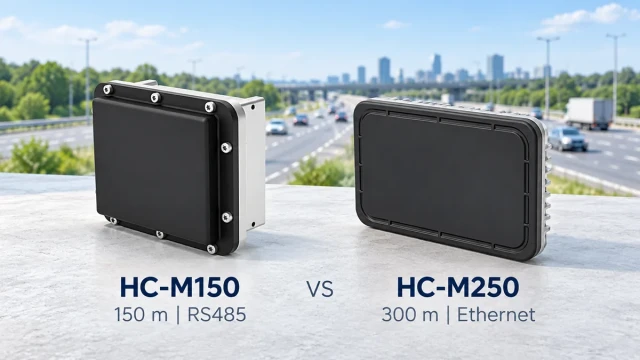
Use the HC-M150 versus HC-M250 selection guide to compare their application and interface fit. Do not assume the class definitions from one protocol apply unchanged to another model, firmware or delivered configuration. Confirm the classification output for the unit being integrated.
You can send the required class list and road conditions for review before deciding how to collect and report the data. Include sample reference images if the categories are difficult to describe consistently.
A useful classification result has an agreed meaning, belongs to the correct vehicle passage and has been checked under the required road conditions. Those checks establish whether the output supports the project more clearly than a class count or a headline accuracy claim on its own.